Claudia
Interview with the VampireClaudia is the child vampire whose permanent body conceals an adult and increasingly formidable mind. Her creation binds Louis and Lestat into a family structure that is at once affectionate, coercive, theatrical, and doomed: she is presented as their daughter, yet she is also the living consequence of Louis’s hunger and Lestat’s decision to keep Louis from leaving. Through Claudia, the narrative makes arrested childhood the central contradiction of vampire existence—an immortal intellect imprisoned within a form that the world continues to read as helpless and young.
Identity and Creation
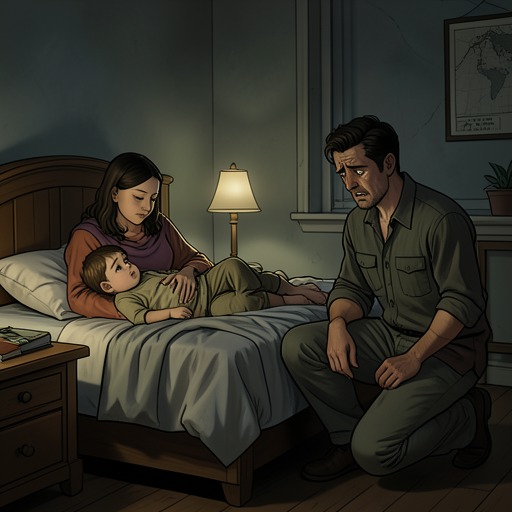
Claudia enters the vampire household as a mortal child near death. Louis is drawn to her sickness, her warmth, and the persistence of her heart; he tells himself that killing her would spare her an intolerable future, but recognizes that these thoughts conceal his desire for her blood. He drinks from her until Lestat forcibly interrupts him. Lestat then cuts his own wrist and gives Claudia his blood, reviving her and completing her transformation. When she awakens, she is composed, healthy, and radiant with the cold fire of a vampire, while the mortal bodies around her are explained as both sick and dead.
Lestat immediately turns the transformation into a domestic claim. He tells Claudia that she is now the daughter of both himself and Louis, and uses her new presence to secure Louis’s continued attachment to him. Claudia resists the language at first, insisting that she is her mother’s daughter, but Lestat closes the bedroom door and locks it, making the new family arrangement feel less like an innocent household than an imposed enclosure. Her identity is therefore established through competing acts of possession: Louis has taken her life, Lestat has remade her, and both men attempt to define what she is.
Life and Development
Claudia remains physically a small child, but her vampire senses and intelligence develop without any corresponding bodily growth. Years pass while her body retains its childlike size and shape, even as her eyes acquire the awareness of an adult and her voice develops a sharper, womanly resonance. Louis initially treats her as a magical doll, dressing her, brushing her hair, and calling her “Doll,” yet the tenderness of these rituals increasingly conflicts with the mind looking back at him. Her arrested body grants her the appearance of innocence while her consciousness becomes reflective, sensual, intellectually demanding, and capable of cold calculation.
She becomes Louis’s companion and pupil, spending long hours absorbing the knowledge he gives her. Music, painting, books, and conversation form the shared culture of their relationship, and she can sit patiently listening to him for hours. At the same time, her killing becomes chillingly efficient. In the darkness of the square, she presents herself as a frightened child to kindly strangers, then clings to them as they carry her away and kills them through the very trust her appearance produces. Later she refines the performance, leading victims toward doll shops or cafes, accepting their chocolate and tea as part of the deception while waiting for the moment to feed.
Her intellectual growth repeatedly exposes the limits of the household. Claudia questions Lestat’s predictions, demands more books, and proposes stealing them from a wealthy collector in the Faubourg Ste.-Marie. She can move from laughter and intense intelligence to a sudden, unsettling boredom with the childish ceremonies imposed upon her. She tells Louis that killing is more serious than books or music, even while music remains one of the things that binds them. The contrast is decisive: she is not simply becoming an older child, but discovering that the moral and practical demands of vampire existence exceed the domestic roles assigned to her.
Relationships and Revolt
Louis and Claudia share the closest bond in her life. He remembers that he alone gave her the fatal embrace that took her mortal life, yet she survives to put her arms around his neck, press her mouth to his, and whirl with him through the room. Their relation is described through contradictory forms—father and daughter, lover and lover, pupil and teacher, companion and accomplice. Claudia’s attachment to Louis is not merely sentimental; she clings to him partly because, despite his failures, he remains closer to human sympathy than either Lestat or herself.
Her relationship with Lestat is more openly antagonistic. Lestat supplies the blood that makes her immortal and attempts to make her grateful for the household he has created, but Claudia eventually identifies him as the source of their dependence. She reasons that Lestat killed the vampire who made him, refused enslavement, and then made Louis into a “mindless accomplice.” From this interpretation she concludes that she and Louis are slaves, and declares that she will free them both by killing him. The plan grows from an intellectual reconstruction of their history, but it is also an assertion of agency by someone whose body continually invites others to underestimate her.
Claudia’s revolt is sharpened by her discovery that Lestat has defined the terms of her existence while denying her the knowledge needed to understand it. On the Feast of All Saints, surrounded by flowers associated with New Orleans’s celebration of the dead, she asks which of the two men made her what she is. She remembers that Louis once had a mortal sister and recognizes that both Louis and Lestat were once mortal themselves. Her question breaks the silence that has protected the household’s arrangement. Lestat responds with mockery and a tirade, but his defensiveness confirms the power of what she has uncovered.
Louis resists her plan because he fears Lestat’s strength and because he cannot accept the destruction of the family, however corrupt it has become. Claudia insists that Lestat causes her pain and has no further use for them. Her determination turns the familiar streets beside the cathedral and Jackson Square into the setting for a crisis: Louis tries to deny the possibility of killing Lestat, while Claudia walks ahead like a child pretending to separate from her parents. The scene makes her contradiction visible. Her gestures remain childlike, but her purpose is deliberate, political, and lethal.
Search for Origins and Paris
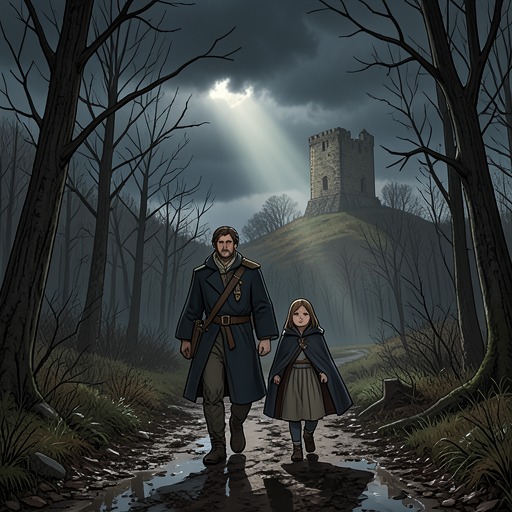
After the apparent destruction of Lestat, Claudia directs the journey toward central Europe. She believes that the vampires of Eastern Europe may explain their origins and provide the knowledge Lestat withheld. Her chosen route runs toward the Black Sea, Varna, and the Carpathians, guided by old accounts in which vampires are burned, staked, and decapitated. Louis experiences the voyage as a movement into darkness, while Claudia treats the books of vampire lore as a practical guide and a kind of Bible.
The search yields disappointment rather than fellowship. In Transylvania, Hungary, Bulgaria, and neighboring regions, the vampires they find are mindless corpses: haggard, decayed figures without secrets or truths. Claudia’s hope for a communion with her own kind therefore exposes a deeper gulf between her and Louis. She wants answers, but she also wants belonging; Louis realizes that she may be less human than either he or Lestat, lacking ordinary sympathy for mortal existence. Their quest nevertheless carries them onward to Paris, where the name of the city promises Louis a rare rush of pleasure and where Claudia’s search for a vampire community finally seems to have succeeded.
In Paris, Armand invites Louis and Claudia to the Théâtre des Vampires. The invitation specifically calls for the “petite beauty,” treating Claudia’s small form as both attraction and credential. At the theater, human spectators watch vampires perform death as entertainment, while the actual killing beneath the theatrical illusion remains hidden in plain sight. The stage’s masks, scythes, painted forest, and shifting lights turn predation into spectacle; Claudia, sitting beside Louis, sees a society that has made performance its method of survival. The theater’s underground rooms, dominated by monumental images of death and fallen angels, extend that logic into a ritualized vampire world.
Claudia’s presence also alters the theater’s gaze. To mortals she can appear to be a human child carried in Louis’s arms, but to the vampires she is an object of knowledge and suspicion. The theater offers a community that might answer her questions, yet it is also a system capable of converting her into a spectacle and enforcing its own laws. Her hope for a larger family thus leads directly into the institution that will destroy her.
Death and Aftermath
Claudia’s final fate is bound to the execution of Madeleine. Louis creates Madeleine as a companion for Claudia, but the new vampire’s transformation is overwhelming: Madeleine moves through the rooms of the Hôtel Saint-Gabriel with extraordinary violence, kills with uncontrolled force, and burns the clothes and possessions associated with her dead daughter. Claudia’s apparent triumph in acquiring someone devoted to her cannot erase the instability of the household or the danger posed by the Parisian coven.
The Théâtre des Vampires condemns Claudia and Madeleine. Their deaths are carried out through fire, and the destruction is presented not as a simple disappearance but as a brutal separation of bodies, clothing, hair, and memory. Louis finds Madeleine’s burned body still bearing the impression of her living face, while Claudia has become ashes. The image recalls the earlier murdered mother and daughter whose remains Louis once saw in New Orleans, joining the beginning and end of Claudia’s existence through a repeated tableau of violated family bonds.
Louis’s grief becomes physically violent. He attacks Santiago and struggles with Armand as they force him away from the rain-soaked remains, but he cannot gather Claudia and Madeleine’s bodies to take them with him. Armand says that he could not prevent the execution, yet the statement does not restore trust. Claudia’s death ends the family she had tried to remake and leaves Louis with the knowledge that his love for her was inseparable from the act that created her.
Narrative Significance
Claudia is the novel’s most concentrated figure of contradiction. She is called a demon child, but her danger comes not from childish ignorance; it comes from the adult intelligence forced to inhabit a child’s body. Her appearance enables deception, invites protection, and denies her social recognition, while her mind gives her the capacity to diagnose domination and organize resistance. The narrative repeatedly places her in scenes of watching and being watched: she performs fear for mortal victims, observes Lestat with cool scrutiny, sits beneath the theatrical gaze of the Parisian vampires, and becomes part of a spectacle whose rules she cannot control.
Her story also transforms the meaning of Louis’s memories. His attachment to Claudia begins in appetite, develops into tenderness and shared culture, becomes political complicity, and ends in irreversible loss. When the boy listening to Louis’s account later asks for the power to live forever, the request reveals how completely Claudia’s tragedy has been misunderstood by an outsider. The boy sees the passion and adventure of her existence but not the imprisonment within it. Louis’s refusal to treat immortality as a gift is inseparable from Claudia’s fate: she did not merely die young; she was condemned to remain young while her mind changed, then was destroyed when she attempted to claim an origin and future of her own.